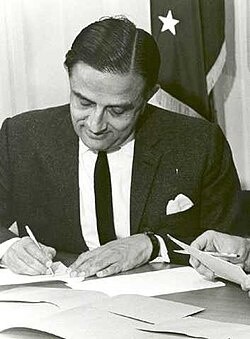
From cosmic rays to a laboratory
Vikram Ambalal Sarabhai was born on 12 August 1919 into an industrialist family in Ahmedabad. After studying natural sciences at Cambridge, he researched cosmic rays, and in 1947 he took the lead in founding the Physical Research Laboratory in Ahmedabad.
A tool, not a luxury
His most far-sighted idea was that for a developing country, space technology need not be a luxury: it could be a tool for development, for communication, weather forecasting, education and mapping resources.
Proposing a space programme when resources were scarce took courage. Under his leadership INCOSPAR was set up in 1962, followed by the institutional foundations of the Indian Space Research Organisation, and early programmes such as the Thumba Equatorial Rocket Launching Station began India’s space journey.
Institutions that outlived him
He also shaped IIM Ahmedabad, the Community Science Centre and several other institutions. He died suddenly in December 1971, but the direction he set was carried forward by Satish Dhawan and later generations.
The roots of ISRO’s work today, in communication, weather, navigation, remote sensing and planetary missions, lie in Sarabhai’s vision of science tied to society’s problems.
Sources
- ISRO: Vikram Sarabhai
- Physical Research Laboratory
- ISRO: history
- isro.gov.in/VikramSarabhai.html
- prl.res.in/
- isro.gov.in/profile.html