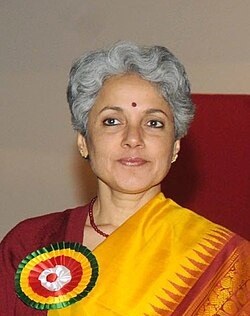
Her own path
Soumya Swaminathan was born in Chennai in 1959. She is the daughter of the agricultural scientist M. S. Swaminathan, but her professional career developed independently, in clinical medicine and public health.
After training in paediatric medicine and research, she worked on tuberculosis, the interaction of HIV and TB, and operational research.
Evidence into policy
At the National Institute for Research in Tuberculosis and later in leadership roles at ICMR she worked on clinical and public-health research systems. Her main field is TB diagnosis and treatment research, clinical epidemiology, and translating evidence into policy.
The impact of health science grows when evidence travels from publications to policy and to implementation on the ground.
WHO and back home
She became Deputy Director-General of the World Health Organization and then its first Chief Scientist, responsible for global synthesis of scientific evidence and coordination of research. Going from clinical researcher to national research administrator to global science-policy leader was a career across many scales.
Back in India she chairs the M. S. Swaminathan Research Foundation and is principal adviser to the National TB Elimination Programme. Her influence on TB control, research governance and global health policy reaches well beyond India.
Sources
- WHO/TDR: Soumya Swaminathan
- MSSRF team
- ICMR
- tdr.who.int/global-health-matters-podcast/women-in-science/dr-soumya-swaminathan
- mssrf.org/mssrf-team
- icmr.gov.in/