Classroom and folk stage
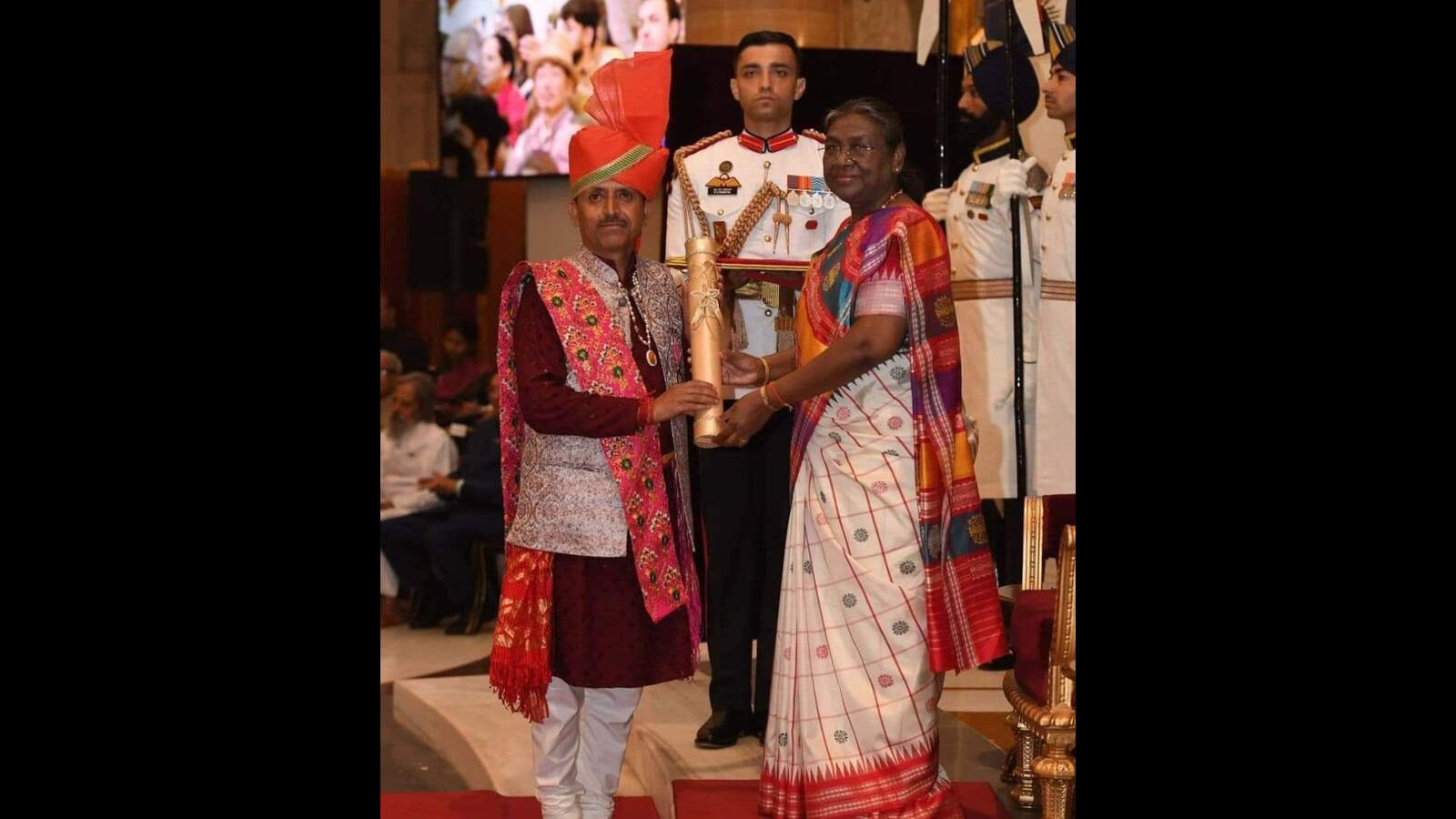
Romalo Ram’s story belongs to two places: the classroom and the folk stage. According to his official Padma citation, he was born on 3 March 1963 and took his BA from the University of Jammu in 1985.
In 1987 he became a government teacher and worked on the education of village children in remote areas. He retired in March 2023 as Zonal Education Officer, Ramnagar. All along, he kept writing and performing Dogri poems and folk songs.
Reviving Geetru and Bhakh
From 1980–81 he began performing Dogri folk music under the banner “Romalo Ram and Party”. The official citation links him to reviving two dying folk forms, Geetru and Bhakh, and names Mission Maa Dogri as the base for training young people.
The citation mentions a learning and working network of more than 150 pupils. That matters, because his contribution lies less in any single stage show than in building a system that passes the art on.
Culture and education, one cause
The 2024 Padma Shri gave him national visibility, but his core work is in the local language, in folk song and in the steady training of young performers. His years in education kept him close to villages and children.
In his life, culture and education are not separate boxes. Together they help protect Dogri identity.
Sources
- Padma Awards 2024: official citation
- PIB: Padma Awards 2024 list
- Hindustan Times: profile
- padmaawards.gov.in/Document/pdf/CitationsForTickets/2024/2024102.pdf
- pib.gov.in/PressReleasePage.aspx?PRID=1999790&lang=2®=48
- hindustantimes.com/cities/chandigarh-news/president-confers-padma-shri-to-dogri-folk-artist-romalo-ram-101715368453640.html