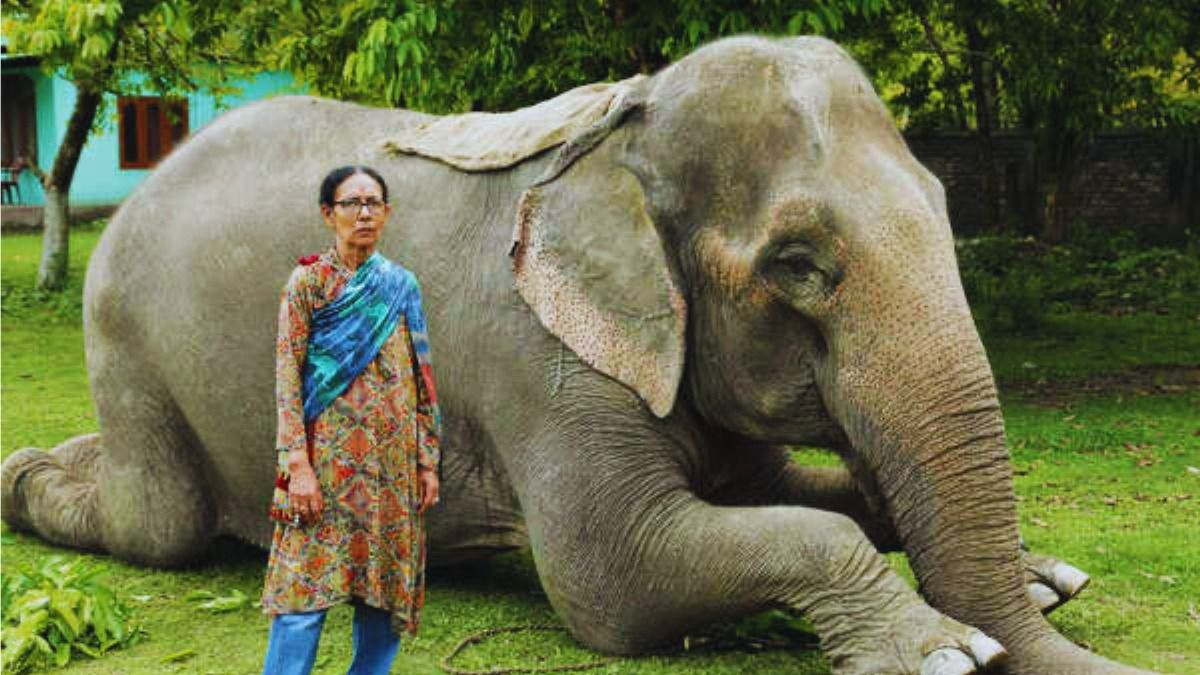
A childhood among elephants
Parbati Baruah grew up in Gauripur, in a world where elephants were part of both family and work. She learned elephant behaviour from her father, an elephant specialist, and from the mahout tradition. Government and media records recognise her as India’s first woman mahout.
According to official biographical material, she began handling elephants as a teenager and had her first experience of taming a wild elephant at 14.
Decades in the field
In the 1970s her name was linked with the management and training of wild elephants by the Mela Shikar method. Over time she came to advise forest authorities in Assam and West Bengal on elephant capture, training and behaviour.
The other important side of her work is human-elephant conflict, a serious problem in Assam and the Northeast as habitats shrink. She has said again and again that elephant behaviour must be understood in its ecological context, not only as a danger, and she stresses affection, patience and animal psychology in training.
Recognition
The UNEP Global 500 honour, honorary roles in elephant welfare in Assam, the Asom Gaurav and the Padma Shri in 2024 recognised her long experience. But her real story is both breaking a gender barrier and holding a hard-won field knowledge that comes not from books but from decades with the animals.
Wildlife conflict is solved not by force alone but by understanding ecology and behaviour.
Sources
- Padma Awards 2024: notification
- Ministry of Information and Broadcasting: People's Padma profile
- USTM: Social Work Excellence Award 2024
- padmaawards.gov.in/Document/pdf/notifications/PadmaAwards/2024.pdf
- mib.gov.in/sites/default/files/2024-09/mann-ki-baat_1.pdf
- ustm.ac.in/event/padma-shri-parbati-barua-receives-ustm-social-work-excellence-award-2024/
- gnttv.com/india/story/india-first-female-elephant-mahaout-parbati-baruah-won-padam-shree-for-her-work-for-elephants-922025-2024-03-07