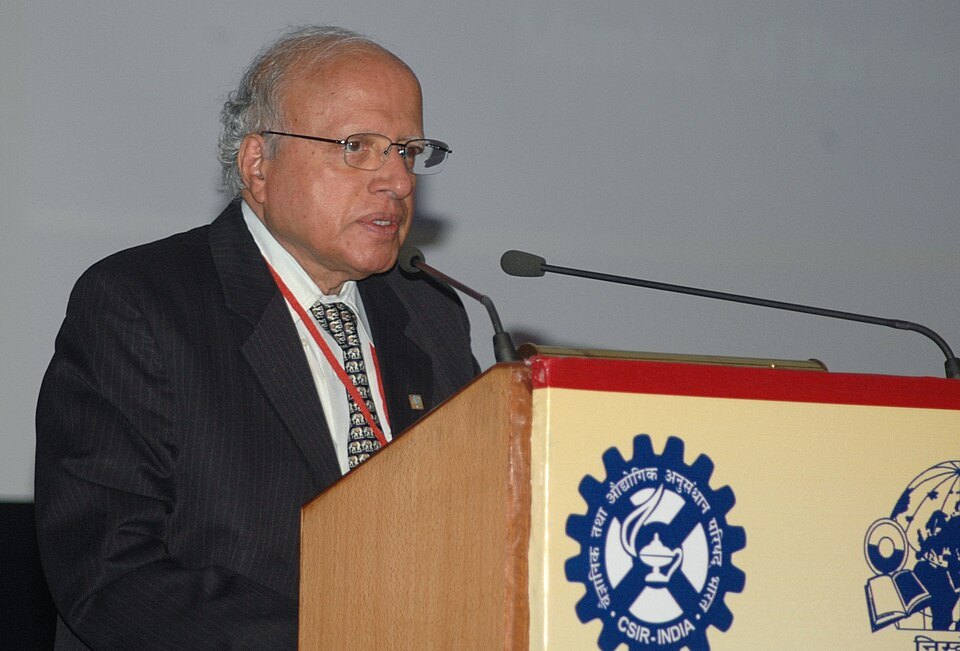
The famine that changed his path
According to the M. S. Swaminathan Research Foundation (MSSRF), he was born in Kumbakonam. His family hoped he would study medicine. But the Bengal famine of 1943 and wartime food shortages turned him towards agriculture. After a degree in zoology he studied agriculture at Coimbatore Agricultural College and went on into plant genetics and plant breeding.
Wheat and the Green Revolution
At the Indian Agricultural Research Institute (IARI) he worked on the genetics and breeding of dwarf wheat. He was among the leading Indian scientists in the large network that tested and adapted Norman Borlaug’s Mexican dwarf wheat for Indian conditions.
Wheat output grew fast because many things came together: field demonstrations, seed multiplication, policy support, fertilizer and irrigation, and above all farmers willing to try the new seed.
Building institutions
He became Director General of the Indian Council of Agricultural Research (ICAR) and held other leading roles in agricultural research and education. Later he became Director General of the International Rice Research Institute (IRRI), the first Asian to hold that post. In 1987 he was the first laureate of the World Food Prize, and he went on to found the M. S. Swaminathan Research Foundation.
After the Green Revolution: the Evergreen Revolution
High-input farming helped end food scarcity, but it also raised concerns about groundwater, soil, biodiversity and chemical use. In his later years Swaminathan championed the idea of an “Evergreen Revolution”: raising productivity without ecological damage. That change in his thinking is an essential part of his story. Seeing him only as a scientist who maximised yields leaves out half of it.
Bharat Ratna
He died on 28 September 2023. In 2024 he was awarded the Bharat Ratna posthumously. On 30 March 2024 his daughter, Nitya Rao, received the honour on his behalf.
His life shows that food security comes from science, policy, infrastructure and farmers working together, and that good scientific leadership keeps learning from its own consequences.
Sources
- MSSRF: Early life and family
- MSSRF: Architect of the Green Revolution
- MSSRF: Founder profile
- PIB: Bharat Ratna 2024
- Wikimedia Commons: Government of India photograph
- mssrf.org/prof-tributes/early-life-and-family
- mssrf.org/prof-tributes/architect-of-the-green-revolution
- mssrf.org/founder
- pib.gov.in/Pressreleaseshare.aspx?PRID=2016698&lang=2®=48