A nursery, very early
According to the official Padma citation, Hangthing started a plantation nursery in 1988. It later became the Jungyam Nursery and Horticulture Farming Society. In Noklak, a remote district on the border, he introduced fruits, plants and vegetables that had not been grown there before. The aim was not just more variety, but to free farming from depending on a single season.
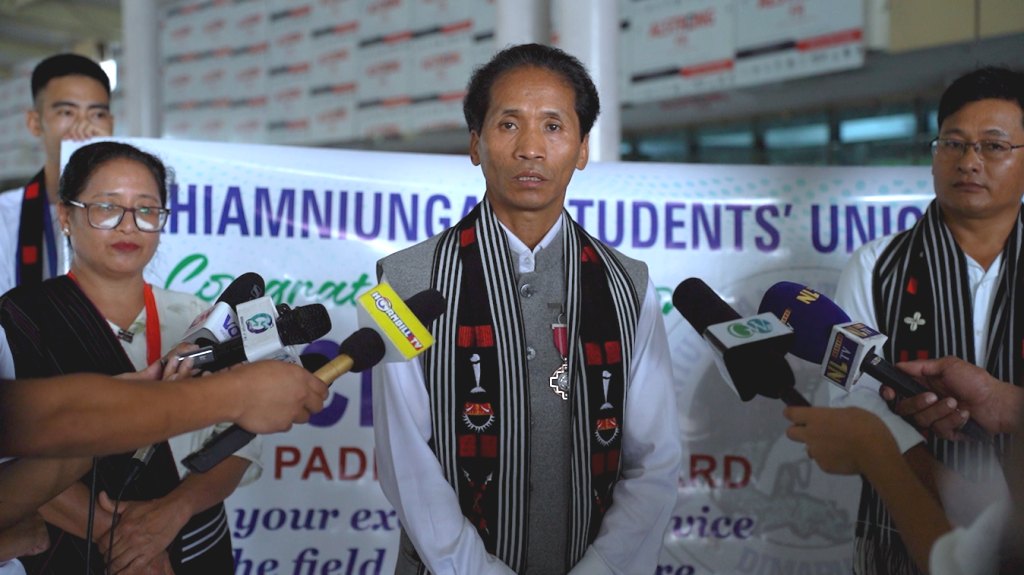
At a felicitation after the award, he remembered his early days of planting discarded seeds and running small experiments. That is the heart of his story: building a farming model through observation and persistence in a place with few resources.
The Agro-Revolution Society
In 2001 he formed the Agro-Revolution Society, focused on moving beyond the traditional one-crop pattern by combining seasonal farming, horticulture and livestock. Local reports describe him as a farmer who shared what he learned with hundreds of others.
Taste of Noklak
In 2018, with his wife Mongshai and local farmers, he set up the Taste of Noklak Society (TONS). By 2021 the society had launched more than 15 products, and the “Made in Noklak” name began to be known outside the district. It was an important step: farmers were no longer only selling raw produce, but also processing and branding it.
From farm to local economy
Alongside the nursery and farm he runs a homestay, linking agriculture, local products and rural tourism. In 2021 he won the district’s Best Fish Farmer award. After receiving the Padma Shri in 2025, he dedicated it to the farmers of Nagaland and to the Khiamniungan community.
His work shows that diversity makes small farms stronger, that processing and branding add value to local produce, and that a remote district can be a centre of farm experiments.
Sources
- Padma Awards 2025: official citation
- Nagaland DIPR: felicitation report
- Eastern Mirror: 'Fruit Man of Noklak'
- presidentofindia.gov.in/files/2023-06/padma_2nd_3.pdf
- ipr.nagaland.gov.in/node/16987
- easternmirrornagaland.com/fruit-man-of-noklak-pushes-for-tradition-of-self-sufficiency