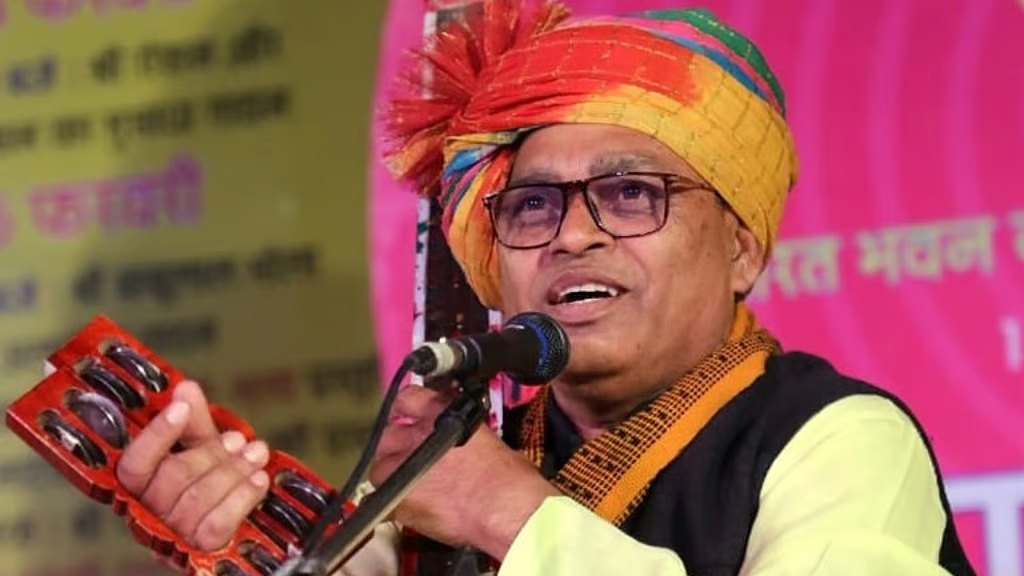
An oral tradition from age nine
Kaluram Bamaniya’s music did not come from a formal music school. It came from his family’s satsang tradition. According to several cultural sources and a 2025 interview, he began playing the manjira at about nine with his father, grandfather and uncle. At thirteen he went to Rajasthan and learned a large repertoire of songs from Ram Niwas Rao, a travelling Mirasi singer.
This is how an oral tradition survives: a child keeps time on the manjira, walks with his family to satsangs, and decades later carries the same songs to national stages.
Living Kabir, not just singing him
For him, singing Kabir is not just a stage repertoire. In a Hindustan Times interview he describes Kabir’s words as an invitation to look within at life, death, caste and religion. He prefers a simple form, with traditional instruments like the tambura and khartal, so that the words stay in front.
From Malwa to stages at home and abroad
Kaluram and his mandali have performed the compositions of Kabir, Mirabai and other Bhakti poets in India and abroad. Platforms such as the Jodhpur RIFF festival and the Rajasthan Kabir Yatra have recorded this living tradition. It is an important form of heritage: these songs live not in books, but in being sung and passed on.
The Padma Shri and the next generation
The Padma Shri in 2024 brought national recognition, but his work had been going on for decades before that. His MyGov profile also highlights how he encourages and trains younger singers. He linked the award to the tradition of his father and grandfather.
The real story is not the award. It is the decades of practice before it, and the singers who will carry the songs after.
Sources
- PIB: Padma Awards 2024
- MyGov India: profile video
- Hindustan Times: 'Kabir invites us to go within' (interview)
- Jodhpur RIFF 2024: programme
- pib.gov.in/PressReleasePage.aspx?PRID=1999790&lang=2®=48
- hindustantimes.com/books/kaluram-bamaniya-kabir-invites-us-to-go-within-101748336694020.html
- jodhpurriff.org/wp-content/uploads/2024/09/240916-JODHPUR-RIFF-2024-Scheduled.pdf