Seeing disability as a question of policy
K. S. Rajanna’s story is not only about personal resilience. The most important part of his public life is disability rights and accessibility. Reports from 2013 to 2015 describe him as Karnataka’s first differently-abled Commissioner for Persons with Disabilities.
Inspections instead of a desk
Soon after becoming Commissioner, Rajanna began acting on wheelchair ramps and access in government offices and hospitals. Reports in the Bangalore Mirror and Deccan Herald record concrete steps, such as an inspection of Bowring Hospital and a deadline for departments to install ramps and railings. They show an official who enforced rights, not a symbolic appointee.
He turned what he knew from his own life into enforcement of policy.
Grievances and representation
In 2014 he pushed for a differently-abled assistant commissioner in the commission, so that people with lived experience of disability would be part of the grievance system. Access to education and jobs, transport, parking and public buildings come up again and again in his record.
The Padma Shri, and the right way to tell it
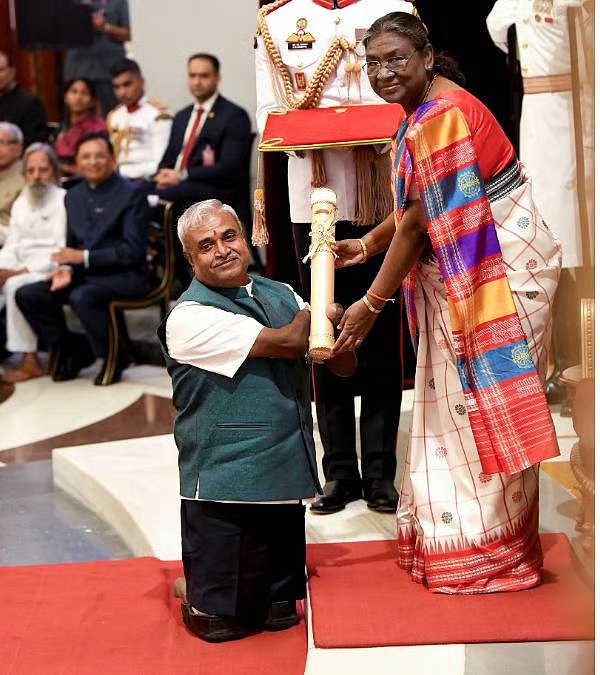
In 2024 the Government of India awarded him the Padma Shri for Social Work. Photographs from the ceremony, where he moved forward on his own without assistive support, were widely shared. It was a moving moment, but he should not be turned into a “superhuman” story. His real contribution is to rights, access and changes in how institutions work.
Disability rights are not about charity. They are about access and equal participation, and about removing the barriers that stand in the way.
Sources
- PIB: Padma Awards 2024
- Bangalore Mirror: 30-day deadline for wheelchair ramps at government offices
- Deccan Herald: ramp up facilities for disabled patients (Bowring Hospital)
- PRAJYA (June 2024): profile
- pib.gov.in/PressReleasePage.aspx?PRID=1999790&lang=2®=48
- bangaloremirror.indiatimes.com/bangalore/others/30-day-deadline-for-wheelchair-ramps-at-govt-offices/articleshow/24613777.cms
- deccanherald.com/content/366062/ramp-up-facilities-disabled-patients.html
- publications.davchennai.org/wp-content/uploads/2024/07/PRAJYA_June-2024_Digital-File.pdf
- freepressjournal.in/india/who-is-ks-rajanna-64-year-old-physically-challenged-social-worker-conferred-with-padma-shri