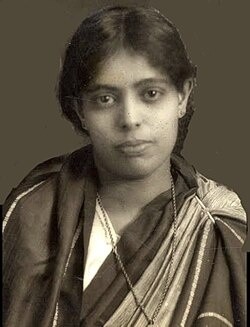
An unusual path
Edavaleth Kakkat Janaki Ammal was born on 4 November 1897 in Tellicherry (Thalassery), Kerala. At that time an advanced science career was rare for Indian women.
She studied botany, earned higher degrees at the University of Michigan in the USA, and specialised in cytogenetics, the study of chromosomes and heredity. Choosing higher education abroad and an independent scientific career, against the social expectations of her era, was exceptional.
Sugarcane and the chromosome atlas
At the Sugarcane Breeding Institute in Coimbatore she worked on sugarcane varieties and chromosome behaviour, work relevant to breeding for Indian conditions. Polyploidy (extra chromosome sets), chromosome numbers, hybrids between species and crop cytogenetics were her core areas.
Later, in England, she joined the Royal Horticultural Society and worked with C. D. Darlington on the Chromosome Atlas of Cultivated Plants.
Home, and the native flora
After Independence she returned to India and worked with the Botanical Survey of India and on plant resources. She championed the protection of biodiversity and native flora.
She set a visible precedent for Indian women scientists and linked botany and cytogenetics to agriculture and conservation. Her legacy is not just being among the first women, but the quality of her science.
Sources
- Botanical Survey of India newsletter
- CSIR-IIIM Herbarium: Janaki Ammal
- Royal Horticultural Society
- bsi.gov.in/uploads/userfiles/file/ENVIS/ENVIS%20NEWSLETTER/ENVIS%20Newsletter%20Vol.%2020%282%29%202015.pdf
- iiim.res.in/herbarium/edavaleth-kakkat-janaki-ammal.htm
- rhs.org.uk/