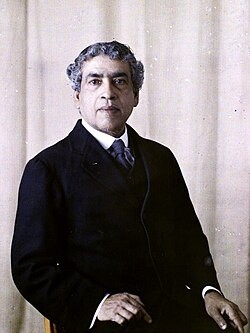
Making do in Calcutta
Jagadish Chandra Bose was born on 30 November 1858 in the Mymensingh region, now in Bangladesh. After studying natural sciences at Cambridge and London, he began teaching physics at Presidency College, Calcutta.
He faced racial discrimination, unequal pay and a lack of laboratory resources. He did not stop: he built his own apparatus and did his experiments anyway.
Waves, then plants
In the 1890s he made devices to generate and detect millimetre-wave, or microwave, radiation and gave demonstrations of wireless signalling, with early work on semiconductor-like detectors and waveguide parts.
Later his research turned to plants. Using very sensitive instruments, above all the crescograph, he tried to record plant growth and their responses to stimuli in numbers. Few scientific lives cross the borders between physics, instrument engineering and biology like this.
An institute for all of science
In 1917 he founded the Bose Institute for interdisciplinary research; it is among India’s oldest modern research institutions. He showed Indian students that experimental science was not Europe’s monopoly, and his legacy runs from radio science to biophysics.
Sources
- Bose Institute
- Royal Society
- Encyclopaedia Britannica: J. C. Bose
- boseinst.ac.in/
- royalsociety.org/
- britannica.com/biography/Jagadish-Chandra-Bose