Starting out
Harvinder Singh has set several firsts in Indian para-archery. According to his official Padma citation, an adverse reaction to an injection in childhood left his left lower limb with a permanent disability. He began archery in 2012 under coach Jiwanjot Singh Teja, and started his international career in 2017.
A string of firsts
At the 2018 Asian Para Games in Jakarta, his gold in the Men’s Individual Recurve Open made him the first Indian to win an Asian Para Games gold in para-archery. His bronze at the Tokyo 2020 Paralympics made more history: he became the first Indian archer to win a Paralympic medal. After a team bronze at the Hangzhou Asian Para Games, Paris 2024 gave him his defining moment.
Paris, and a gold for India
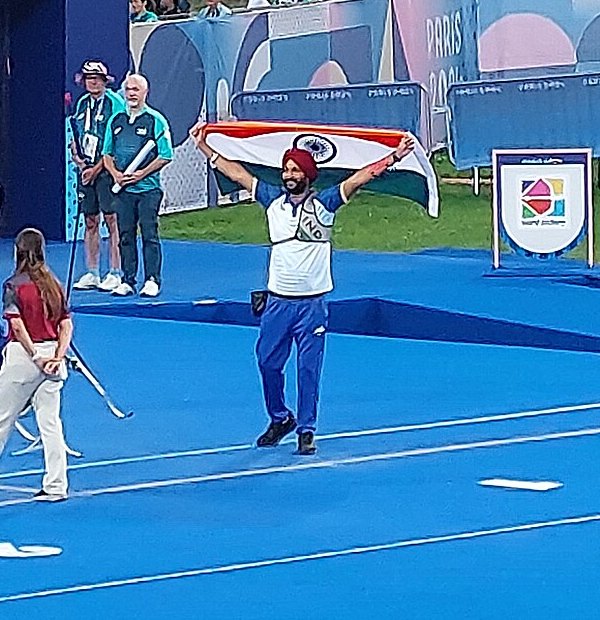
His gold in the Men’s Recurve Open at the Paris 2024 Paralympics made Harvinder India’s first Paralympic archery gold medallist. It did more than add to the medal tally; it lifted para-archery into the national sporting conversation. After the Arjuna Award in 2021 and the Haryana Bhim Award in 2022, he received the Padma Shri in 2025.
The economist on the archery range
His other story is academic. After a Master’s in Economics from Punjabi University, Patiala, he went on to a PhD in Economics. Running elite training and doctoral research side by side shows a rare kind of discipline.
His story should not be told only as “overcoming disability”. The real lesson is years of technical training, resilience in competition and academic discipline. Elite performance comes from excellence, not sympathy.
Sources
- Padma Awards 2025: official citation
- PIB: Padma Awards 2025 ceremony
- International Paralympic Committee: 'India's Harvinder Singh motivated by golden success'
- Wikimedia Commons: photograph by Nicolas22g (CC BY-SA 4.0)
- padmaawards.gov.in/Document/pdf/CitationsForTickets/2025/202562.pdf
- pib.gov.in/PressReleasePage.aspx?PRID=2131791&lang=2®=48
- paralympic.org/news/india-s-harvinder-singh-motivated-golden-success
- commons.wikimedia.org/wiki/File:Harvinder_Singh_-_Para_Archery_at_the_2024_Summer_Paralympics.jpg