Choosing the village
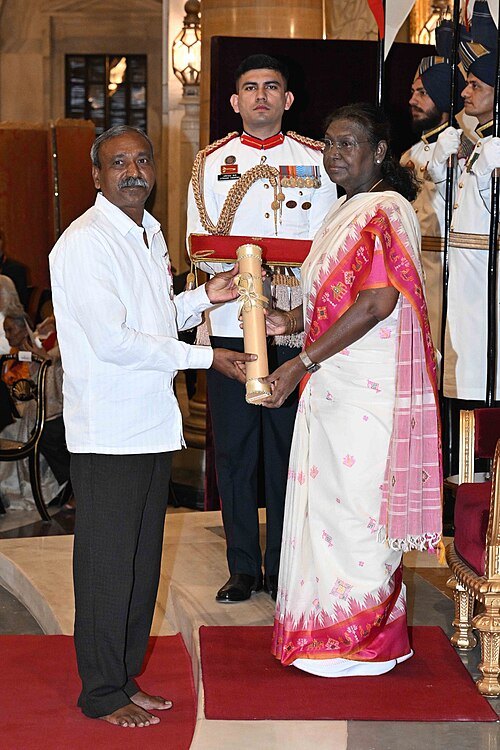
Chaitram Deochand Pawar’s story is about changing a tribal village like Baripada through the care of natural resources and community institutions. According to his official Padma citation, he was born on 1 June 1967 in Baripada and completed an M.Com at the University of Pune in 1993. Instead of an urban career, he chose tribal welfare and village development.
Catching the rain
Watershed work was at the centre of it: loose boulder bunds, contour trenches and water conservation. The citation records 5,000 trees planted at the start, and later the restoration of 445 hectares of dense forest. Protective irrigation reached at least 500 acres, and rabi irrigation about 250 acres. Community rules, forest protection and water management made farms more productive and the village more resilient.
More than trees
The work did not stop at ecology. It also tackled malnutrition, girls’ education, sanitation, safe drinking water, better cooking stoves, solar cookers and women’s role in decisions. He also served as an expert member of the Forest Advisory Committee.
The Baripada model is special because it tied conservation to how the village governs itself. Planting trees mattered, but so did agreeing on rules everyone would keep.
Sources
- Padma Awards 2025: official citation
- Kalpavriksh: Baripada village case study
- Wikimedia Commons: Padma Shri ceremony photograph
- static.pib.gov.in/WriteReadData/specificdocs/documents/2025/apr/doc2025428547201.pdf
- kalpavriksh.org/baripada-village/
- commons.wikimedia.org/wiki/File:The_President_of_India,_Smt_Droupadi_Murmu_presenting_the_Padma_Shri_Award_to_Shri_Chaitram_Deochand_Pawar_at_the_Civil_Investiture_Ceremony-I_at_Rashtrapati_Bhavan,_in_New_Delhi_on_April_28,_2025.jpg