Plants in stone
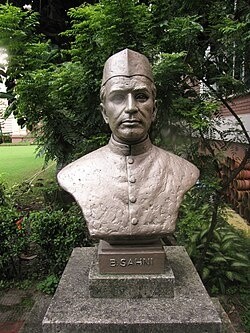
Birbal Sahni was born on 14 November 1891 in Bhera, now in Pakistan. After training in botany and palaeobotany at Cambridge, he returned to India.
He began research on fossils of ancient plants, on the Gondwana flora, and on how plants evolved.
A discipline in Lucknow
At Lucknow University he made palaeobotany an organised discipline. His systematic taxonomy and evolutionary studies of Indian fossil floras, especially Gondwana plants, built a bridge between geology and botany.
Through fossil plants he helped explain India’s geological history, its ancient climate and the evolution of plants.
An institute for the deep past
The field was small in India at the time. In 1946 he laid the foundation of a dedicated palaeobotanical institute, which after his death in 1949 grew into the Birbal Sahni Institute of Palaeosciences.
Its work today reaches into palaeoclimate, fossils, geochronology and Earth-system history. Reading the past helps us understand the future, and even a niche field can become a national strength through institution-building.
Sources
- Birbal Sahni Institute: founder background
- BSIP
- Royal Society
- bsip.res.in/en/bsip_Prof_birbal_Sahni_background
- bsip.res.in/
- royalsociety.org/