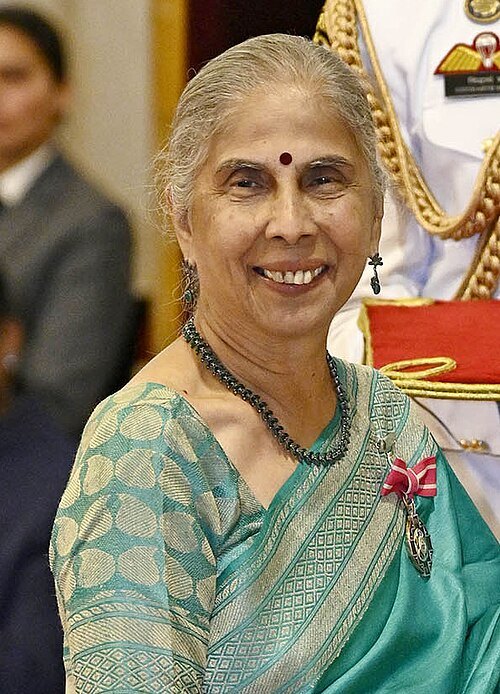
From newborn care to public health
Dr. Armida Fernandez’s career runs from a hospital ward to public health across a city. Her official Padma citation describes her as a pioneer in neonatology, maternal and child health, nutrition and community-based public health. She won several academic medals during her MBBS, and from the 1970s worked in paediatric and newborn care at Mumbai’s Lokmanya Tilak Municipal Medical College and General Hospital, where she later headed neonatology and served as Dean from 1999 to 2001.
A milk bank born of need
According to SNEHA’s history, in 1989 she set up a human milk bank at Sion Hospital, which the organisation describes as the first in Asia. For premature and low-birth-weight babies, donated human milk can be life-saving support when a mother’s own milk is not available. The milk bank was a practical answer to a problem she saw on the ward every day.
The bigger problem was outside
In the early 1990s she and her team noticed something troubling. Babies who had been saved in hospital became vulnerable again at home, because of poor nutrition, too little information and limited access to health services. That pushed her to look beyond the ward and work with communities and public systems. In 1999 she founded SNEHA.
SNEHA: from treatment to health equity
SNEHA’s model brings together community work, strengthening government health systems and research. Working on maternal and newborn health, child nutrition, adolescent health and gender-based violence, it treats health as something shaped by living conditions, nutrition and access, not only by illness. That shift may be her most important legacy.
Her story shows that good clinical care and community health belong together, and that an innovation matters most when it reaches the people who need it.
Sources
- Padma Awards 2026: official citation
- SNEHA: Our story
- SNEHA: People
- SNEHA media kit (2019): human milk bank
- Wikimedia Commons: Padma Shri photograph
- static.pib.gov.in/WriteReadData/specificdocs/documents/2026/jun/doc2026623901101.pdf
- snehamumbai.org/our-story/
- snehamumbai.org/people/
- snehamumbai.org/wp-content/uploads/2019/06/Media-Kit-2019.pdf
- commons.wikimedia.org/wiki/File:Armida_Fernandez_receiving_the_Padma_Shri.jpeg