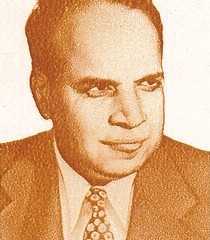
Medicine through hard times
Yellapragada Subbarow was born on 12 January 1895 in the Bhimavaram region of the Andhra area. Amid difficult finances and personal losses, he completed his medical education at Madras Medical College.
He then went to the USA and joined Harvard.
Phosphorus and muscle
At Harvard he worked with Cyrus Fiske on measuring phosphorus compounds and on energy metabolism in muscle. The Fiske–Subbarow method for measuring phosphorus became widely used.
His contribution to the early biochemical history of phosphocreatine and ATP, the molecules a muscle uses to store and spend energy, is considered important.
From the lab to medicines
Racial and immigration barriers and an unstable academic position did not stop his research. He moved from academia to industrial drug discovery, and as research director at Lederle Laboratories his teams contributed to folic-acid chemistry, antifolate drugs and the broad-spectrum antibiotic aureomycin (chlortetracycline).
He died in 1948, aged only 53. By bridging biochemistry and medicine, his work had a lasting influence on diagnostics, metabolism research and drug development. Good leadership can make a whole ecosystem of discoveries possible, even when public fame is small.
Sources
- PubMed: historical review
- PMC: biography and review
- Harvard Medical School
- pubmed.ncbi.nlm.nih.gov/39163070/
- pmc.ncbi.nlm.nih.gov/articles/PMC11415601/
- hms.harvard.edu/