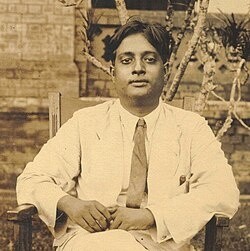
A gifted student
Satyendra Nath Bose was born on 1 January 1894 in Calcutta. He was an outstanding student of mathematics and physics and studied at Presidency College alongside contemporaries such as Meghnad Saha.
Rejected, then sent to Einstein
In 1924, at Dhaka University, he derived Planck’s radiation law in a new statistical way. A journal rejected the paper at first, so Bose sent it directly to Albert Einstein. Einstein saw its importance, translated it into German and had it published.
Einstein extended Bose’s idea to material particles. This laid the theoretical basis for Bose–Einstein statistics and later Bose–Einstein condensation. Particles with integer spin came to be called “bosons”, after Bose.
A new way of counting
His counting method treated identical quantum particles in a fundamentally different way from classical particles, and became a foundation of quantum statistics. Photons are bosons; from the Higgs boson to ultracold atomic gases, Bose statistics is central to modern physics.
Back in India he stayed devoted to teaching, mathematical physics and science education, and to explaining science to the public.
Sources
- S. N. Bose Archive
- Britannica: Satyendra Nath Bose
- Royal Society
- newweb.bose.res.in/Prof.S.N.Bose-Archive/
- britannica.com/biography/Satyendra-Nath-Bose
- royalsociety.org/