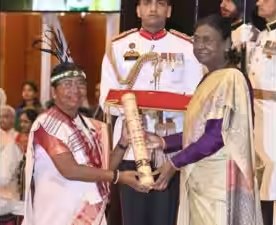
Four decades in the forest
Dr. Budhri Tati’s story is one of more than four decades of grassroots work in Bastar’s remote forest communities. Her official Padma citation names her as President of Maa Shakhini Mahila Utthan Kendra, Hiranar, and recognises her for women’s education, self-employment and social service in Naxal-affected areas. She was born on 15 September 1966 into a poor family in Hiranar.
According to the citation, she joined the Akhil Bharatiya Vanvasi Kalyan Ashram in 1984 and trained in social work in Nagpur. From 1986, with Barsur as her base, she began outreach for women’s awareness and education across rugged forest areas.
A hostel, because distance was the barrier
When distance itself kept girls out of school, simply telling families to send them was not enough. In 1990 she started a hostel with 11 girls. The citation now records a free hostel supporting 50 girls from primary school to higher education, and notes that the Maa Sharda Girls’ Hostel has run free of cost since 2013.
Education and livelihoods together
Her approach joins education with livelihoods: a women’s training centre and self-employment programmes, Bal Sanskar Kendras for young children, village visits, and persuading parents to send their children to school. Gatherings such as the “Mata Shakti Sammelan” have also given tribal women a shared public space.
Solving a problem of access needs both infrastructure and trust, and difficult terrain makes sustained outreach all the more valuable.
Sources
- PIB / Padma Awards 2026: official citation
- PIB: Padma Awards 2026
- The Times of India: 'Meet Dr Budhri Tati, the Badi Didi'
- static.pib.gov.in/WriteReadData/specificdocs/documents/2026/jun/doc2026623901101.pdf
- pib.gov.in/PressReleasePage.aspx?PRID=2218662&lang=1®=3
- timesofindia.indiatimes.com/women/voices-of-power/when-others-saw-fear-in-bastars-forests-she-saw-children-who-needed-schools-meet-dr-budhri-tati-the-badi-didi-who-walked-570-villages-and-earned-a-padma-shri/articleshow/133342791.cms